
Cat window perch for large cats: surface area first, then the mount
Both of those are measured rather than estimated, which is why this page leads with centimeters and with what buyers describe, in that order.
What the measurements say
No maximum load is published for these models, so this page gives measured surface area and reported use instead — the standard set out on our method page.
What we can report is use. Buyers describe two cats settled together on the suction platform at the same time — somewhere around 11 kg / 24 lb between them — and a 15 lb (7 kg) cat on the wooden frame. Those are observed uses rather than tested ratings, and we present them as such.
The three surfaces, measured
| Model | Sleeping surface | What it gives a big cat |
|---|---|---|
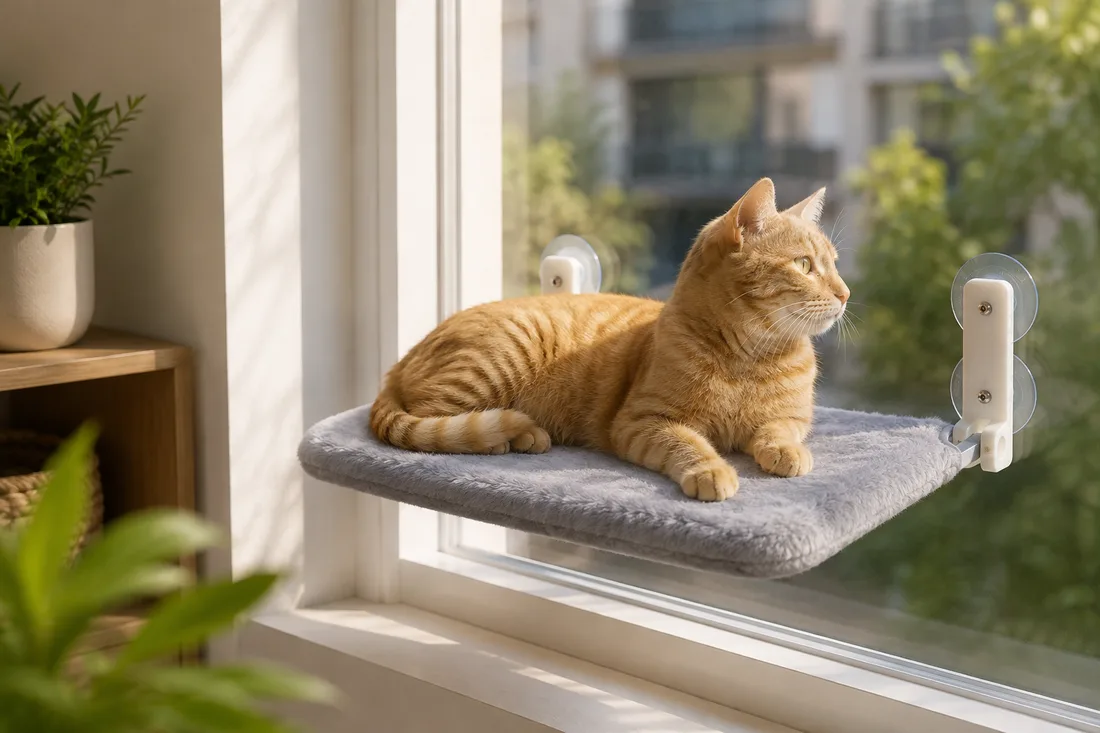
| Suction platform | 45 × 30 cm | The widest flat area; no backrest, so it can sprawl over the edge |
| Radiator bed | 46 × 30 × 25 cm | Same footprint plus a backrest to lean into |
| Wooden frame | 38 × 43 × 21 cm | Deeper front-to-back; suits a cat that curls rather than stretches |
A very large cat will overhang any of them, in the same way it overhangs most cat beds. That is normally fine — cats tolerate an overhanging paw far better than they tolerate a surface that shifts under them.
Why the seating matters more than the rating
A cat tests a surface before committing to it. If it feels movement on the first press it leaves, and it does not come back easily. With a heavy cat that test is simply harder to pass, which is why fitting is the real variable.
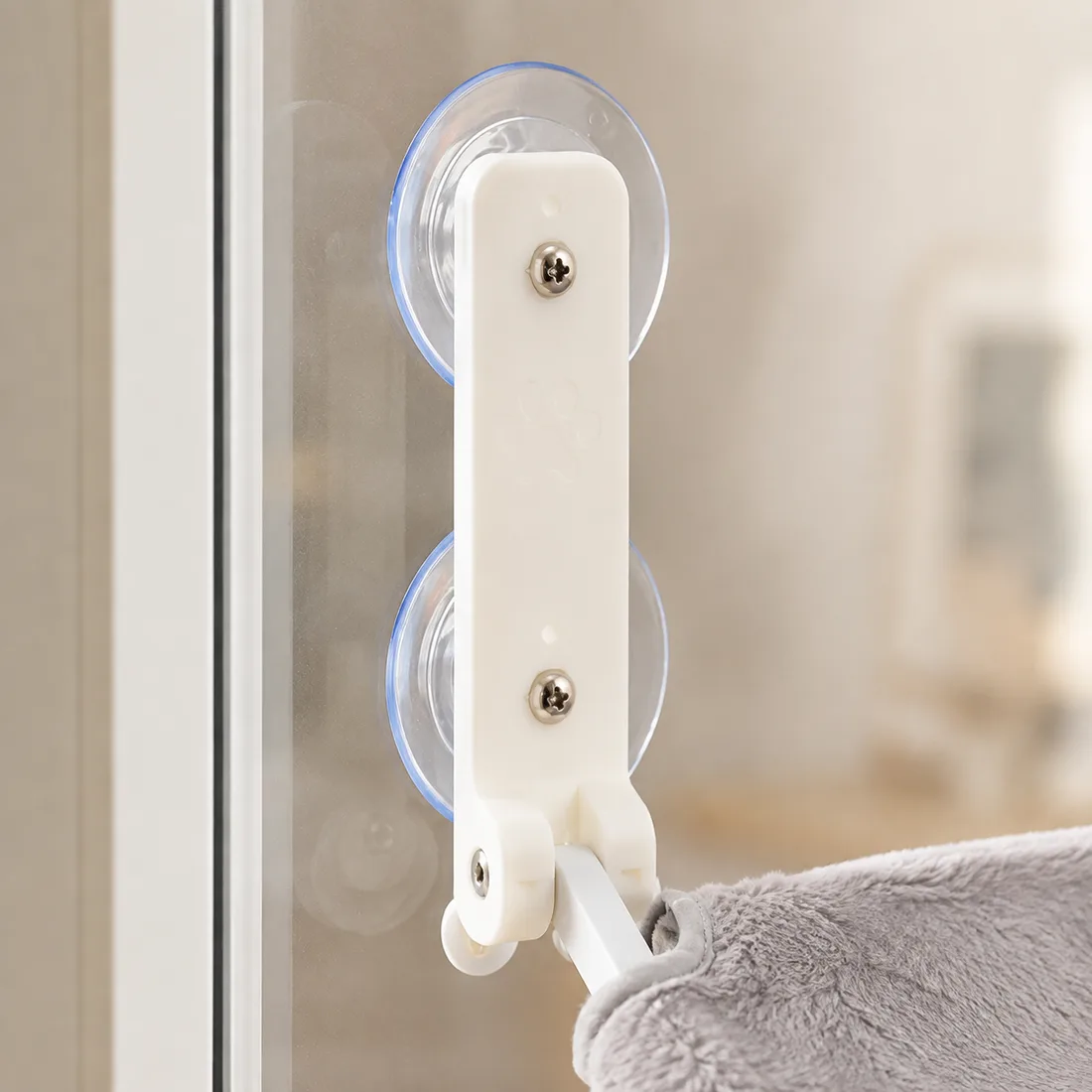
On the suction model that means three habits. Clean, degreased glass — an invisible film of grease is enough to stop the vacuum forming, and a cloth with warm soapy water fixes it. All four cups on the pane, pressed one at a time from the center outward. And load it by hand before the cat goes up, so you find out rather than the cat does.
A cup that starts creeping a few millimeters a day is dirty rather than worn out. Wiping the cups and the glass every two or three months restores the original grip, and that habit matters more with a big cat than a light one.
The measurement that actually stops people
It is not weight, it is glass. The suction platform needs 19.9 in (50.5 cm) of smooth pane, measured across the cups and arms — not the 45 cm the bed size suggests. On a narrow pane the arms end up on the frame, which is the arrangement that fails under a heavy cat.
For the wooden frame the equivalent figure is a sill about 43 cm deep with roughly 5 cm of clearance underneath for the clamp. Neither number changes with the size of the cat, but both become less forgiving as the load goes up.
Getting a heavy cat up there
Large cats are often less enthusiastic jumpers than small ones, and older large cats especially so. An intermediate step decides more than the model does: an armrest, a dresser, a radiator, a storage crate. Three surfaces at 16, 32 and 48 inches beat one at 60, because a cat travels by route rather than by leap.
A dead-end post is the other thing to avoid. A cat wants a way down that is not the way it came up, and a heavy cat is more reluctant than most to reverse out of a corner. Our guide to vertical space in a small home covers how to build the route.
Two cats on one perch
Buyers do report it on the suction platform, and it works when the two get on. Where they merely tolerate each other, a single wide post becomes a point of conflict rather than a shared bed — the rule in multi-cat homes is one more post than you have cats, for exactly this reason.
Two modest posts beat one very comfortable one, because the second defuses the competition. There is more on that on our cat perch page.
Choosing a cat window perch for a large cat
If the window has clear glass, the suction platform gives the largest uninterrupted surface. If there is a sill, the wooden frame takes its load into the masonry rather than the pane, which some people prefer with a heavy cat, and its canvas is the only surface here that machine washes. In the heating season the radiator bed adds the backrest, which large cats tend to lean into.
The comparison of the three mounts sets them side by side.
Common questions about cat window perches for large cats
How much weight does the window perch hold?
No maximum load is published for this model. What we can report is use: buyers describe two cats settled on the suction platform at the same time, around 11 kg / 24 lb between them, and a 15 lb (7 kg) cat on the wooden frame. Those are reported uses, not rated capacities.
Which model has the most room for a big cat?
The suction platform, at 45 × 30 cm of surface. The radiator bed is 46 × 30 cm but adds a backrest, which a large cat tends to lean into. The wooden frame is 38 × 43 cm, so deeper front-to-back and narrower across.
Do all four suction cups need to be on the glass?
Yes, and it matters more with a heavy cat. All four cups on clean, degreased glass, pressed one by one, then load the platform by hand before letting the cat up. Three cups seated and one half on a frame is the arrangement that fails.
Is a Maine Coon too big for this?
A very large breed will overhang a 45 × 30 cm surface the way it overhangs most cat beds. Cats tolerate that better than people expect — what they do not tolerate is a surface that moves. If your cat is at the top of the range, the deciding factor is a correctly seated mount, not the model.